3 point lighting set up
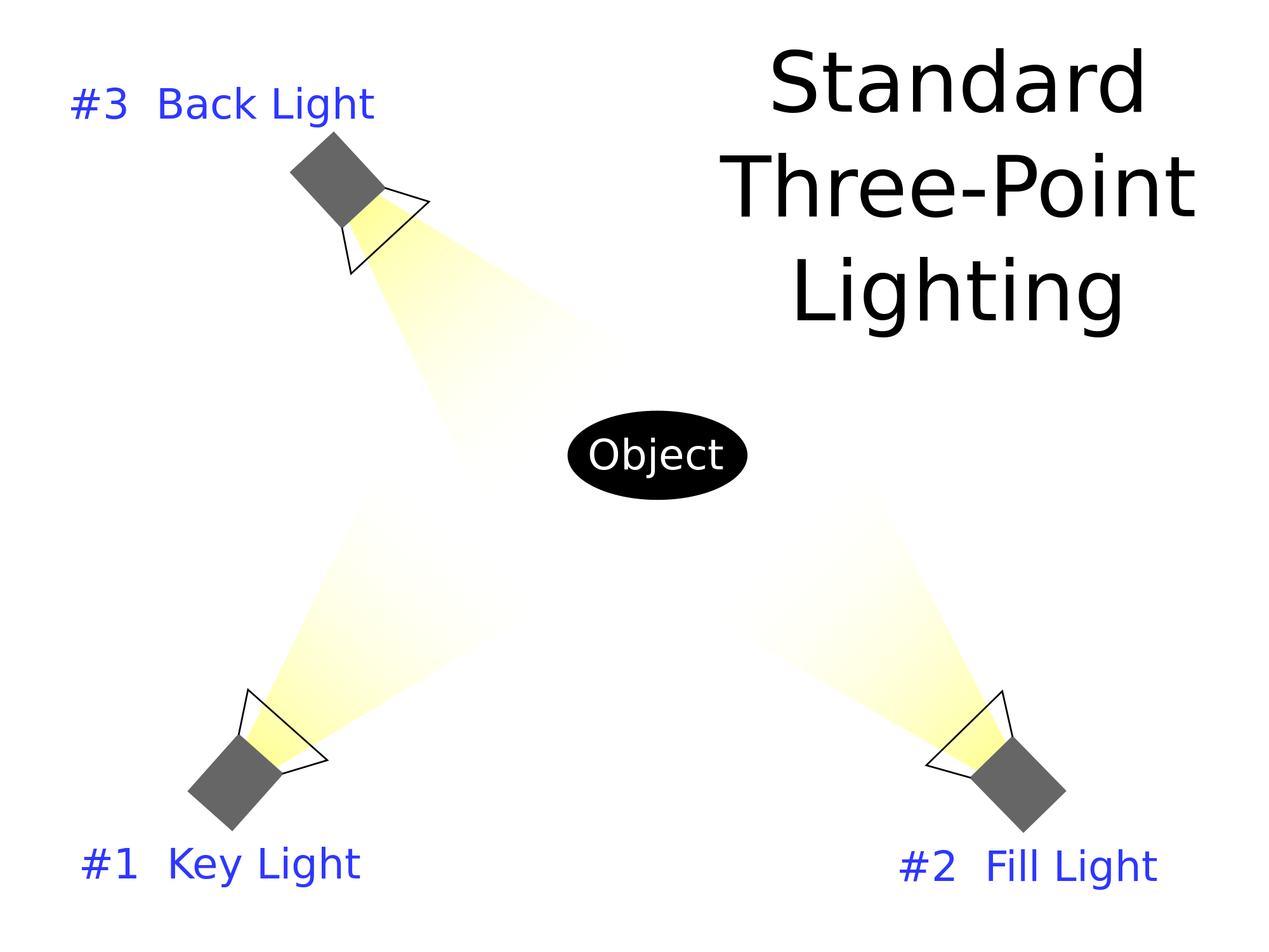 By setting up the sources of light like in this example, it allows you to focus all your direction of light on the subject in your shot. This also allows you to eliminate any shadows. In my set up, the key light was the specialized lamp, the fill light also being a lamp and for the back light I used an LED light mounted onto a tripod.
The key light, as the name suggests, shines directly upon the subject and serves as its principal illuminator; more than anything else, the strength, color and angle of the key determines the shot's overall lighting design.


Butterfly
Butterfly consists of a single light pointed directly at the subject straight on, and raised high enough to create a downward shadow on the
subject. This causes a little ‘butterfly’ shadow to appear
directly
underneath the subject’s nose.
Evaluation - Overall I am pleased with how this shot turned out. The 'butterfly' shadow that forms below the nose due to the positioning of the key light is much larger in some examples i have viewed although it is still visible.

Rembrandt
Rembrandt lighting is a lighting technique that is used in studio portrait photography. It can be achieved using one light and a reflector,
or two lights, and is popular because it is capable of producing images
which appear both natural and compelling with a minimum of equipment.
Rembrandt lighting is characterized by an illuminated triangle under the
eye of the subject on the less illuminated side of the face
Evaluation - I struggled to get a perfect triangle using this lighting technique, this is definitely a technique for me to improve on. However I feel I understand the concept of the shot.

High Key

Low Key
Low-key lighting is a style of lighting for photography, film or television. It is a necessary element in creating a chiaroscuro effect. Traditional photographic lighting, three-point lighting uses a key light, a fill light, and a back light for illumination.

Reflector
Reflectors simply reflect the light from your light sources into the direction of the subject in your shot.


Evaluation - I did not notice too much of a difference whilst the subject was using the reflector, however I did have the lamps on quite high so there already was a lot of light directing to the subject.
Experimenting with shadows

The only light source I used in this shot, was an LED light positioned slight to the left of my camera, as you can see this developed angled shadow identical to the subject. It also has created a 'Horror' effect look within the shot due to the LED being the only source of light, therefore it is very low key.


No comments:
Post a Comment